Webb's Wold Farm Blog
Love at First Sight: How a single photo changed everything at Webb's Wold
Hadassah Webb
Founder, Webb's Wold Farm
I have been around sheep my entire life.
I got my first Shropshire when I was about twelve years old, back when I was deep in the world of 4-H, showing at county and state fairs and learning everything there was to learn about raising and caring for animals. Sheep were never just livestock to me — they were a passion, a craft, and eventually a calling. Over the next 25 years, I raised them, showed them, and poured myself into understanding what makes a truly exceptional animal.
I thought I had seen every sheep worth seeing.
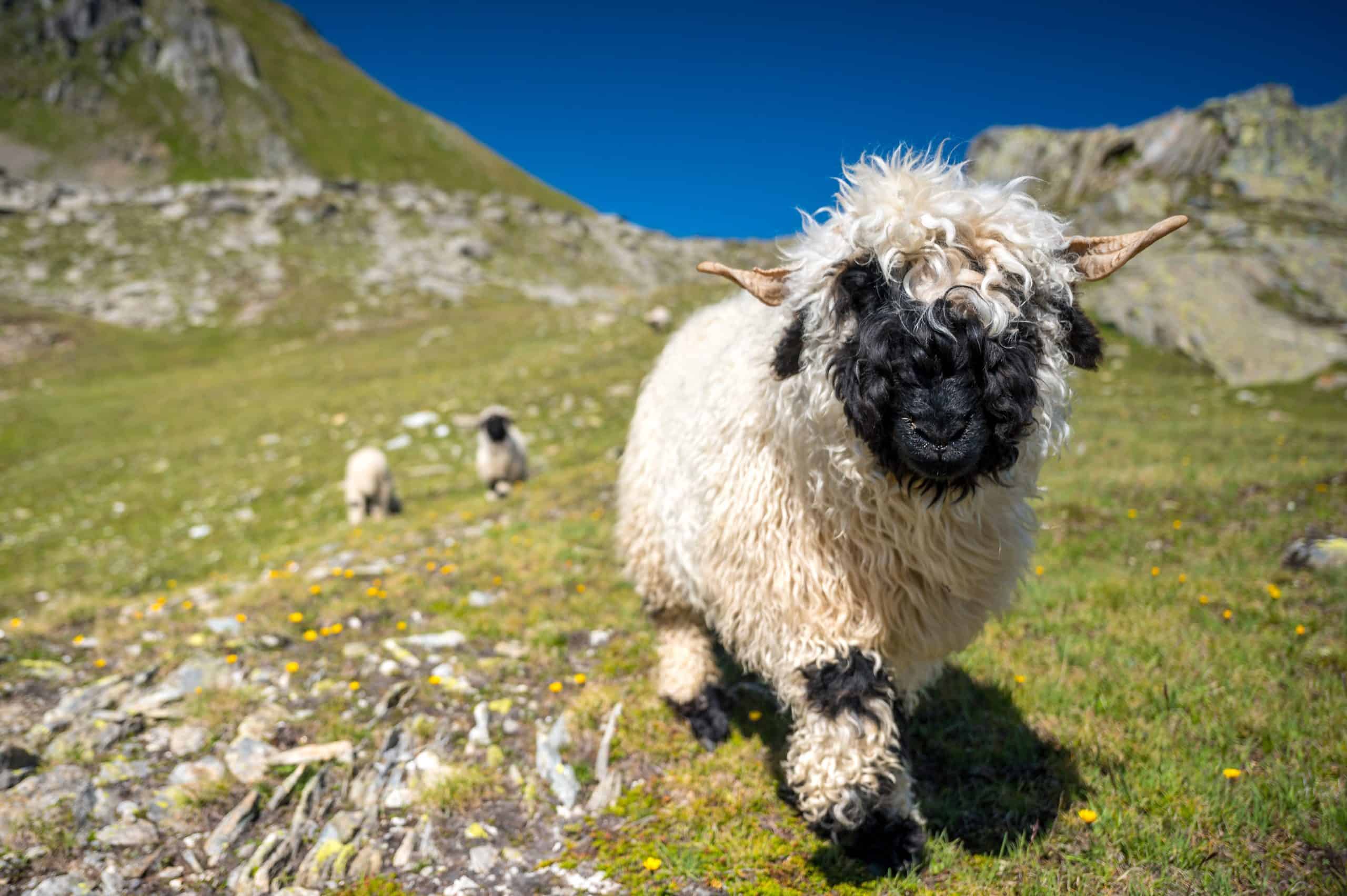
Then one day I was scrolling online and I stopped cold. Staring back at me from the screen was a creature that looked like it had been designed by someone who had never gotten the memo that farm animals aren’t supposed to be magical. A round, woolly body. A perfectly black face. Spiral horns. Eyes that seemed to be smiling. I had no idea what I was looking at, but I knew two things immediately: it was the most remarkable sheep I had ever seen, and I needed one.
It was a Valais Blacknose sheep — and it had just completely rearranged my plans.
The Dream That Almost Wasn’t
I dove into research the way I always do — completely and obsessively. And I hit a wall almost immediately. Valais Blacknose sheep, I discovered, were not available in the United States. Strict federal import regulations designed to protect American livestock from diseases like scrapie meant that live sheep from Switzerland couldn’t legally enter the country. There were none here. Not one.
I was crushed. I filed it away as a beautiful impossibility and tried to move on.
Then, a couple of years later, I came across an article that stopped me in my tracks all over again. A breeder had just received the first shipment of Valais Blacknose semen to legally enter the United States. The USDA had cleared the path for frozen genetic material — not live animals, but a beginning. A real, actual beginning.
My reaction was something close to “Is this a joke?” followed immediately by “Where do I sign up?”
A Program Worth the Wait
What came next wasn’t fast or simple — and I want to be honest about that, because anyone serious about this breed needs to understand what they’re stepping into.
The pathway to Valais Blacknose sheep in America runs through a structured grading-up program. Because live animals couldn’t be imported, breeders had to build the breed from the genetics up. It works in generations: you begin with foundation breeds — hardy American sheep with compatible characteristics — and breed them with Valais semen. The first generation (F1) is 50% Valais. Breed those animals back to Valais genetics and you get F2 at 75%. Then F3 at approximately 87.5%. Then F4, pushing toward 93.75% — at which point, under breed society standards, the animals are considered purebred Valais Blacknose.
Each generation takes time. Each breeding season is a commitment. This isn’t a program for the impatient.
I joined it anyway. Because when you’ve spent 25 years raising sheep and you know what you’re looking at, you recognize something worth building.
From Oregon to the Swiss Alps
My involvement in the Valais community has taken me further than I ever expected when I saw that first photo — including all the way to Switzerland.
When the opportunity came to travel to the Valais region on an immersion trip to learn about the breed firsthand — its history, its characteristics, and the judging standards used in its homeland — I went. Standing in the country where these animals have lived for six centuries, watching how Swiss farmers and breeders work with them, learning what “correct” looks like at the source, was an experience that fundamentally shaped how I approach my own program. It gave me a standard to work toward, not just an image to imitate.
I’ve also become an active member of the Valais Blacknose sheep societies working to establish and steward the breed in the United States. This isn’t a hobby pursuit or a social media trend for me. It’s a serious breeding commitment — one that I’ve gotten my daughters Faith, Hope, and Joy involved in as well, just as my own love of animals and showing was shaped by the people and places of my childhood.
Where We Are Today
In 2022, our first F3 ewe lamb was born at Webb’s Wold — a milestone that represented years of patient, deliberate work. Each generation that comes along brings us closer to the breed standard that has made the Valais Blacknose one of the most sought-after sheep in the world.
Purebred embryos have now also been approved for import into the United States, opening an additional pathway for the breed’s future here. We continue our breed-up program alongside these developments, committed to building a flock that reflects the very best of what this breed can be.
We are among a small, dedicated group of American breeders who started early, stayed serious, and kept building. Every lamb born here carries a little more of that Swiss alpine heritage — and a little more of a future for this extraordinary breed in America.
That picture I stumbled across years ago? Best thing that ever happened to this farm.
What to follow our journey, learn about available animals, or talk about what it takes to start your own Valias breed-up program? Get in touch or join our mailing list to say connected with what’s happening at Webb’s Wold Farm.