Webb's Wold Farm Blog
The Valais Blacknose Sheep
Hadassah Webb
Founder, Webb's Wold Farm
A Breed Unlike Any Other
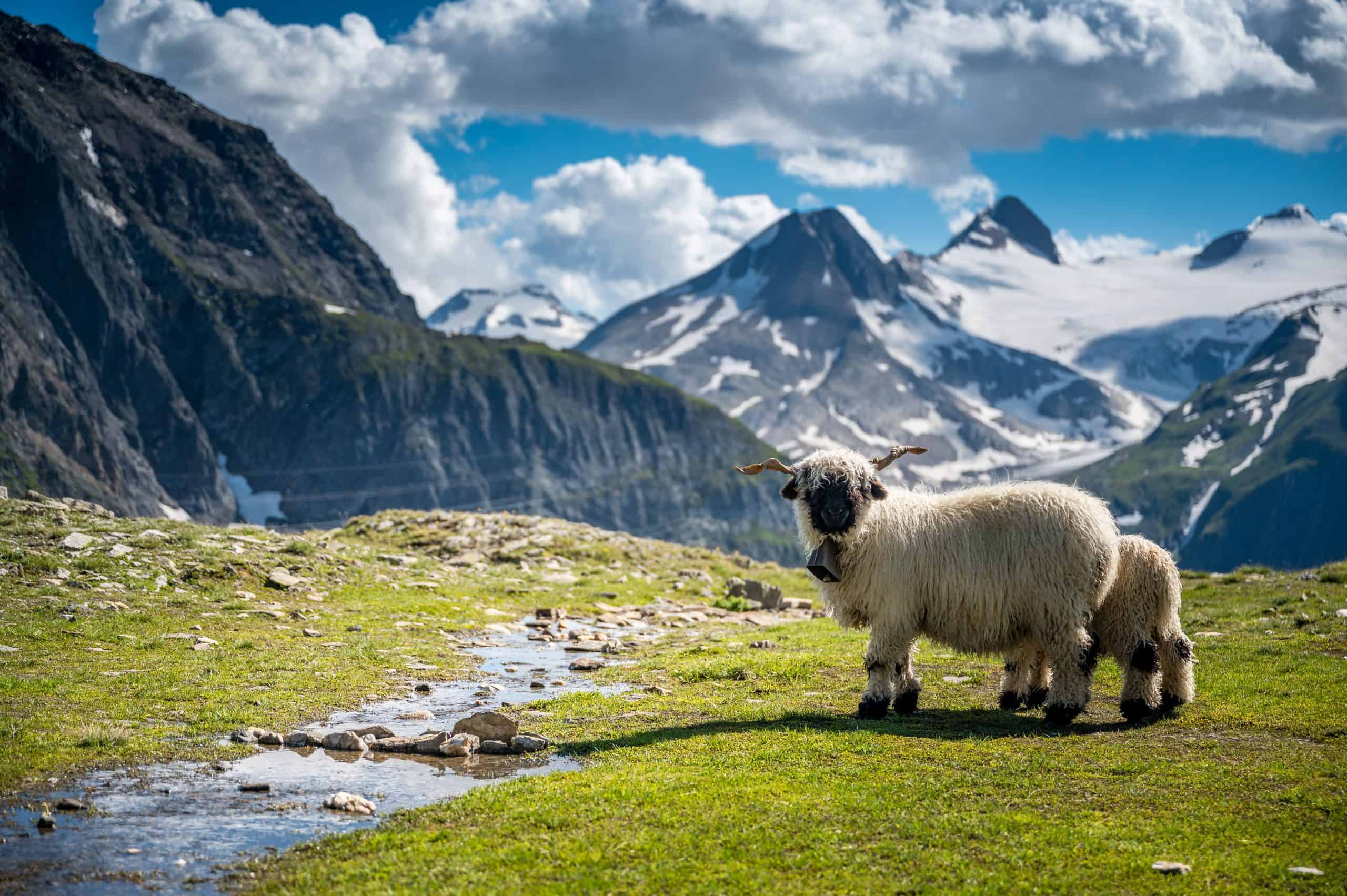
There are sheep, and then there are Valais Blacknose sheep. With their signature black faces, spiral horns, and dense, cloud-like fleece, they are arguably the most visually striking sheep in the world — and one of the most captivating animals in agriculture, full stop. But behind the remarkable appearance is a breed with centuries of substance: hardy, gentle, productive, and deeply woven into the cultural identity of the Swiss Alps.
Born in the Alps
The Valais Blacknose originated in the Valais canton of Switzerland — a rugged, mountainous region that shaped every characteristic of the breed. For centuries, these sheep grazed the steep, rocky slopes of the Alps each summer, developing the hardiness, sure-footedness, and efficient foraging instincts that define them today. The breed has existed since at least the 15th century, with the earliest written references dating to 1400 A.D., though it wasn’t formally recognized as a distinct breed until 1962. Today, approximately 13,700 registered Valais Blacknose sheep are recorded in the Swiss herdbook.
Unmistakably Distinctive
The Valais Blacknose is immediately recognizable — and nearly impossible to forget. Their defining characteristics include:
- Striking black markings on the nose, eyes, ears, knees, hocks, and feet — set against an otherwise white, woolly coat
- Large, spiral horns carried by both rams and ewes — a rarity in sheep breeds
- Long, dense fleece covering the face, legs, and body — requiring shearing twice a year rather than once
They are a large-framed, robust animal — built for mountain life, but equally at home on the farm.
Gentle by Nature
What surprises most people who encounter Valais Blacknose sheep for the first time is their temperament. Despite their imposing horns and dramatic appearance, this breed is calm, curious, and remarkably people-friendly. They are easy to handle, quick to approach, and known for following their caregivers willingly — with or without a feed bucket. It’s a temperament shaped by centuries of close human contact in alpine farming communities, and it makes them a genuine pleasure to raise and show.
More Than a Pretty Face
The Valais Blacknose is a true dual-purpose breed, prized historically for both wool and meat production. Their fleece, while coarser than fine wool breeds, is thick and substantial — yielding approximately 4 kg per animal annually. Their non-seasonal breeding cycle, good maternal instincts, and reproductive rate of roughly 1.6 lambs per year make them a productive and practical addition to any serious breeding program.
A New Chapter in America
For most of their history, Valais Blacknose sheep existed almost entirely in Switzerland. Strict U.S. import regulations — designed to protect American livestock from diseases like scrapie — meant that live animals could not be brought into the country. That began to change in 2016, when American breeders gained USDA approval to import frozen semen from purebred Valais rams. Through a structured grading-up program — breeding percentage animals across successive generations (F1 through F5) toward full breed purity — a small, dedicated community of American breeders began the painstaking, years-long work of establishing the Valais Blacknose in the United States.
It is an agricultural introduction unlike most. The breeders who have committed to this program aren’t simply raising sheep — they are building the genetic foundation of a breed in an entirely new country. Webb’s Wold Farm has been part of that effort since the beginning.
Interested in Valais Blacknose sheep for your farm or breeding program?